When Joints Stop Moving, Tissues Adapt: Understanding “Adhesions” and Why Hands-On Work Matters
How tissues can get "stuck" after periods of immobility
Laurie Kessen
1/18/20262 min read

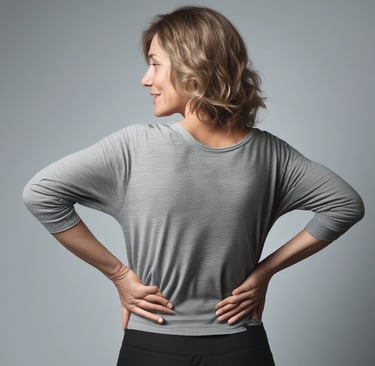
When someone injures a joint—or has surgery, pain, or prolonged immobility—the body does what it does best: it adapts.
Unfortunately, those adaptations aren’t always helpful in the long term.
One of the most common changes that occurs when a joint stops moving normally is the development of what many movement professionals refer to as “adhesions.” Anatomist Gil Hedley describes this beautifully in his talk often called “The Fuzz Speech.” In simple terms, tissues that are meant to glide and slide over one another can begin to stick together, creating resistance, stiffness, and restricted motion.
What Are “Adhesions,” Really?
Healthy fascia, muscle, and connective tissue layers are designed to move freely. When you bend, walk, reach, or rotate, those layers glide effortlessly.
When movement is limited—due to pain, swelling, guarding, or fear—those tissues:
Receive less hydration
Experience reduced sliding between layers
Begin to bind together like fibers in felt
This “fuzz” isn’t scar tissue in the dramatic sense, and it doesn’t mean something is permanently damaged. It simply reflects a lack of movement variability over time.
The result?
Stiffness that feels deeper than muscle tightness
A sense of restriction rather than stretch
Movement that feels “blocked” or heavy
Compensation in other joints or muscles
Why Stretching and Strengthening Alone Aren’t Always Enough
Many people are told to stretch or strengthen when mobility is limited—and both are important. But if the tissues themselves don’t glide well, forcing range of motion or loading strength can:
Shift work into other muscles (often the quads, low back, or neck)
Reinforce compensation patterns
Increase irritation rather than resolve it
This is where hands-on therapy becomes so important.
The Role of Massage Therapy After Limited Mobility
Massage therapy helps address the tissue-level consequences of immobility by:
Improving tissue hydration
Encouraging glide between fascial layers
Reducing protective tone held by the nervous system
Restoring sensory input to areas that have been “offline”
Rather than forcing movement, massage helps tissues become available for movement again.
When tissues can slide, joints often regain motion more easily—and movement becomes less effortful and less painful.
How MyoKinesthetic Treatment Adds Another Layer
MyoKinesthetic treatment goes a step further by connecting:
Muscle tone
Joint position
Nervous system input
After a joint has been limited for a long time, the brain often continues to send protective signals—even when the tissue is capable of moving again. MyoKinesthetic work addresses this by working along nerve pathways and muscle groups that influence joint mechanics.
The result is often:
Improved coordination
Reduced guarding
More efficient muscle activation
Better carryover into daily movement
Why This Matters After Surgery, Injury, or Chronic Pain
If you’ve had:
Joint replacement
A long period of pain
An injury that changed how you move
Fear of loading or using a joint
Then restoring movement isn’t just about strength—it’s about restoring tissue quality and nervous system trust.
Massage therapy and MyoKinesthetic treatment help rebuild that foundation so that strengthening and movement feel safer, smoother, and more effective.
Want to Learn More?
Gil Hedley’s short talk, “The Fuzz Speech,” does an excellent job visually explaining this concept. You can watch it here (warning - it does show muscles from cadavers):
👉 https://www.youtube.com/watch?v=_FtSP-tkSug
If your body feels stiff, restricted, or “stuck,” it may not be weakness—it may be tissues asking to move again.